In many growing businesses, managing employees, workloads, and resources can quickly become complicated. HR managers often deal with multiple responsibilities such as attendance tracking, payroll coordination, employee allocation, and productivity monitoring. When these tasks are handled manually or through disconnected systems, it becomes difficult to maintain control.
This is where admin control in an HRMS plays an important role. A well-structured HRMS gives administrators a central place to monitor employees, manage resources, and plan workforce requirements in advance.
For organizations looking for HRMS software in Hyderabad, proactive resource management through admin control can significantly improve efficiency and decision-making.
Understanding Admin Control in HRMS
Admin control refers to the ability of HR administrators to manage workforce data, employee activities, and resource allocation from a centralized system. Through an HRMS admin dashboard, administrators can view employee information, assign tasks, monitor performance, and manage workforce planning.
Instead of relying on spreadsheets or manual processes, an HRMS allows businesses to organize employee data and resources in a structured and accessible way.
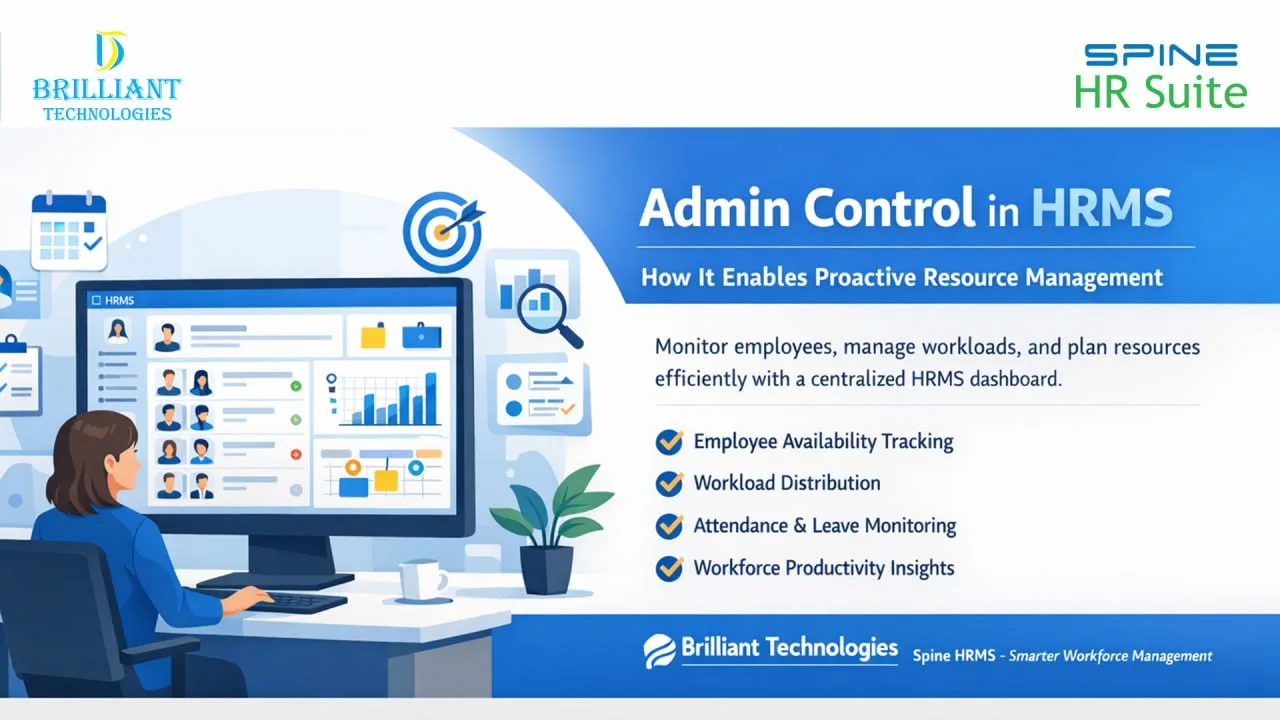
For example, an HR manager can easily track:
- Employee availability
- Workload distribution
- Attendance and leave records
- Departmental resource requirements
As a result, businesses can make informed decisions and avoid resource gaps.
Why Proactive Resource Management Matters
Effective workforce planning helps businesses stay organized and productive. When HR teams can anticipate resource requirements, they can allocate employees efficiently and avoid last-minute disruptions.
With a modern workforce management software, companies can analyze employee workloads and ensure that the right people are assigned to the right tasks.
Moreover, proactive resource management supports:
- Better workforce utilization tracking
- Improved workforce productivity monitoring
- Faster decision-making for HR teams
- Balanced employee workload distribution
Consequently, businesses can maintain smoother operations while reducing administrative stress.
Common Challenges Businesses Face
Many organizations struggle with resource management because of outdated systems or manual processes.
Some common challenges include:
1. Lack of Visibility
HR managers often find it difficult to get a clear overview of employee availability and workload.
2. Manual Data Management
Using spreadsheets for employee resource planning increases the risk of errors and delays.
3. Poor Workforce Allocation
Without proper tools, assigning the right employees to the right projects becomes challenging.
4. Limited Productivity Monitoring
Tracking employee performance and productivity across departments can be difficult without a centralized system.
Therefore, businesses increasingly rely on HRMS admin control features for employee management to overcome these issues.
Practical Benefits for Small and Medium Businesses
For startups and SMEs, managing limited resources efficiently is essential. A structured HRMS system allows businesses to operate more effectively without increasing administrative workload.
Key benefits include:
Better Resource Allocation
An HRMS helps allocate employees based on skills, availability, and project needs.
Centralized HR Admin Dashboard
Administrators can manage employee records, attendance, and workforce data from one platform.
Improved Workforce Planning
Companies can predict staffing requirements and plan resources proactively.
Stronger Operational Control
HR teams gain better visibility into workforce utilization and employee productivity.
Because of these advantages, many companies now look for HRMS resource allocation software in Hyderabad that simplifies HR operations while supporting business growth.
How HRMS Supports Workforce Monitoring
A modern HRMS includes tools for employee monitoring, resource planning, and workforce productivity tracking. These features help HR teams stay informed about how employees are working and where resources are being used.
For instance, an HRMS admin dashboard for employee monitoring can provide insights into attendance patterns, project assignments, and overall workforce efficiency.
Consequently, HR teams can quickly identify gaps, adjust workloads, and maintain balanced team performance.
The Role of HRMS Providers in Hyderabad
Businesses searching for HRMS companies in Hyderabad often prioritize solutions that offer reliable support, practical features, and scalable systems. A dependable HR software company in Hyderabad understands the operational challenges faced by startups, SMEs, and growing organizations.
As an experienced HRMS solution provider in Hyderabad, Brilliant Technologies helps businesses implement HRMS systems that simplify employee resource planning and workforce management.
With solutions like Spine HRMS, organizations can manage employees, track workforce utilization, and improve administrative control through an easy-to-use system.
Conclusion
Managing employees and resources efficiently is essential for business stability and growth. Without proper visibility and control, HR teams may struggle to allocate resources effectively and maintain productivity.
However, a well-designed HRMS with strong admin control capabilities allows businesses to plan workforce requirements, monitor employee performance, and manage resources proactively.
Choosing the right HRMS partner makes a significant difference. With the right expertise and technology, businesses can stay organized, compliant, and prepared for future growth. Companies working with trusted partners like Brilliant Technologies, a leading provider of HRMS software in Hyderabad, gain the confidence and tools needed to manage their workforce efficiently.
FAQs
1. How does admin control improve resource management in HRMS?
Admin control allows HR teams to monitor employees, allocate resources, and manage workforce planning from a centralized HRMS dashboard.
2. Why do businesses need HRMS for workforce planning?
An HRMS helps organizations track employee availability, distribute workloads effectively, and improve workforce productivity monitoring.
3. What features should HR managers look for in HRMS software?
HR managers should look for features such as an HR admin dashboard, employee resource planning tools, attendance management, and workforce utilization tracking.
4. Is HRMS useful for startups and SMEs?
Yes. HRMS systems help startups and small businesses manage employees efficiently, reduce manual work, and improve workforce planning.
5. Why choose HRMS software providers in Hyderabad?
Local HRMS providers understand regional business requirements and offer better implementation support, training, and ongoing assistance.