Performance reviews help organisations understand employee contributions, identify development areas, and make informed decisions about employee growth. However, managing reviews across multiple teams can become difficult when managers follow different rating patterns or when HR teams depend heavily on spreadsheets and manual calculations.
This is where automated scorecard normalization can make a difference. By using an HRMS-based performance management process, organisations can bring greater consistency to employee ratings, reduce repetitive work, and simplify performance reporting.
For businesses looking for HRMS Software in Hyderabad, features such as performance scorecards, rating normalization, appraisal workflows, and reporting can be valuable when building a structured employee performance process.
What Is Automated Scorecard Normalization?
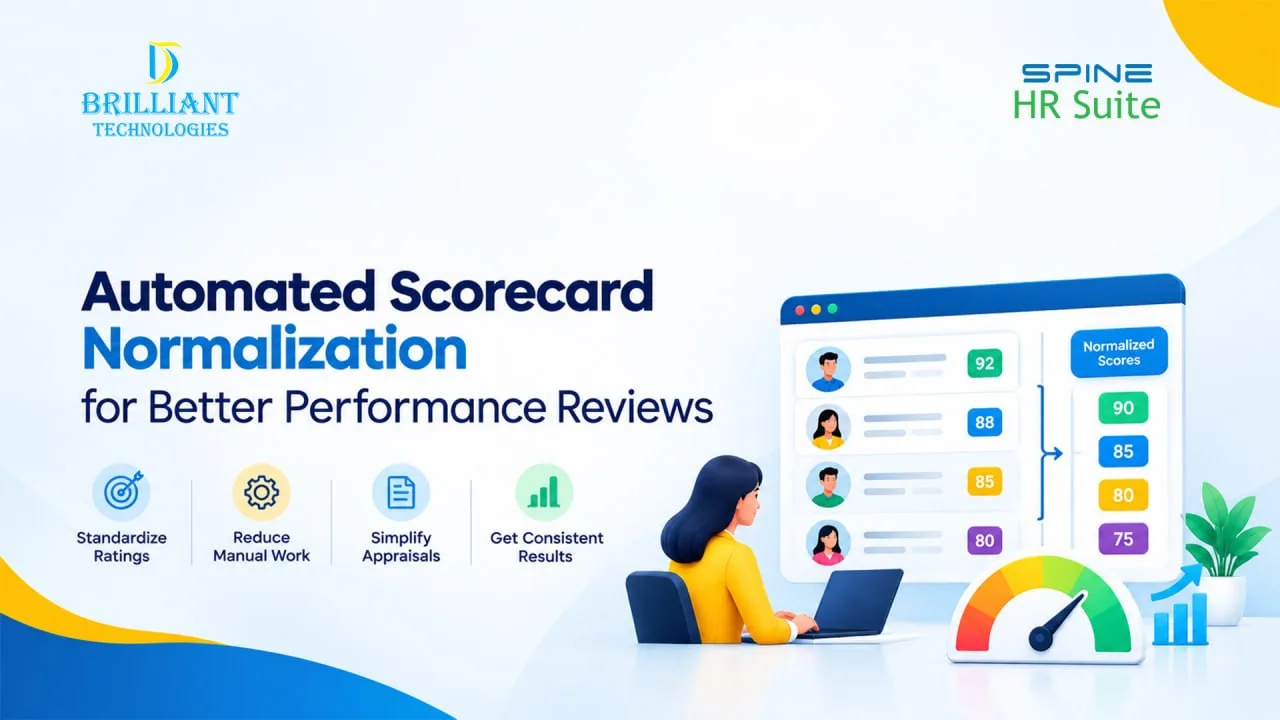
Automated scorecard normalization is a process that uses predefined rules or standards to adjust and organize employee performance scores for more consistent evaluation.
In a traditional appraisal process, managers may rate employees differently even when their performance levels are similar. HR teams may then need to compare scores manually and prepare final reports.
With HRMS scorecard normalization, the system can process performance ratings according to configured rules. This reduces repetitive calculations and gives HR teams a structured way to review employee performance.
Normalization does not mean automatically changing every employee’s rating. Instead, it provides a consistent framework through which performance scores can be reviewed.
Why Is Performance Scorecard Normalization Important?
Performance evaluation becomes more complicated as organisations grow. Different departments may have different managers, teams, KPIs, and rating patterns.
Performance scorecard normalization can help create greater consistency across the appraisal process.
It can help organisations:
- Standardize employee performance ratings
- Reduce manual calculations
- Improve rating consistency
- Simplify the appraisal cycle
- Compare performance data more systematically
- Reduce spreadsheet dependency
- Generate performance reports more efficiently
For HR teams managing a large workforce, these capabilities can make the overall employee performance evaluation process easier to organize.
How Does Automated Performance Normalization Work?
The exact workflow depends on the HRMS configuration, but a typical process can include several stages.
1. Define Performance Criteria
The organisation first establishes the areas employees will be evaluated on. These may include KPIs, goals, productivity, quality, responsibilities, and behavioural competencies.
2. Collect Employee Ratings
Managers evaluate employees using the defined performance criteria. The HRMS collects these employee performance ratings in a centralized system.
3. Apply Normalization Rules
The system applies the configured rules for employee performance normalization. This can reduce the need for HR teams to perform repetitive calculations manually.
4. Review the Results
HR managers can review the normalized scores and identify unusual rating patterns or differences between teams.
5. Generate Reports
The final data can be used to generate performance reports, appraisal reports, and other management summaries.
How Can Automated Scorecard Normalization Improve Performance Reviews?
Consistent Performance Ratings
One of the main challenges in performance management is maintaining consistency between different managers and departments.
A structured performance rating normalization process can help organisations use a common framework when reviewing employee scores.
Less Manual Work for HR Teams
Manual score calculations and spreadsheet-based appraisal processes can consume considerable HR time.
Using automated performance appraisal software can reduce repetitive administrative work. HR professionals can then spend more time reviewing results, supporting managers, and improving employee development processes.
Easier Management of Large Teams
As employee numbers increase, maintaining performance information manually becomes more difficult.
An employee performance management software solution can centralize scorecards, ratings, appraisal information, and performance records, making the process easier to manage across departments.
Better Performance Visibility
A structured HRMS can help HR teams view employee KPIs, ratings, appraisal results, and performance trends in one place.
When combined with performance analytics, this information can support more systematic performance discussions.
Faster Performance Reporting
Preparing appraisal reports manually can involve collecting information from multiple spreadsheets and systems.
A performance management HRMS can centralize relevant information and simplify the process of creating performance reports for HR teams and management.
Auto vs Manual Performance Rating Normalization
Organisations may use automated or manual normalization depending on their internal processes.
| Automated Normalization | Manual Normalization |
| Uses predefined system rules | Relies on manual calculations |
| Reduces repetitive work | Requires more HR effort |
| Suitable for larger employee groups | Can be useful for specific exceptions |
| Supports consistent calculations | Greater scope for manual variation |
| Simplifies reporting | Reports may require additional preparation |
A combination of automation and human review can be useful when organisations need both process consistency and managerial judgement.
What Should Businesses Look for in Performance Management Software?
Businesses evaluating performance management software should look beyond basic employee rating features.
Important capabilities may include:
- Performance scorecards
- KPI management
- Employee self-appraisal
- Manager appraisal
- Automated performance rating
- Auto and manual normalization
- Performance appraisal workflows
- Bell curve generation
- Performance reports
- Appraisal history
- Performance analytics
- Employee evaluation reports
Businesses searching for Performance Management Software in Hyderabad should also consider implementation, customization, integrations, reporting requirements, employee count, and ongoing support.
How Can HRMS Software Support Businesses in Hyderabad?
For growing organisations, selecting suitable HRMS Software Providers in Hyderabad can be useful when businesses need implementation and support for their HR processes.
A suitable HRMS solution in Hyderabad can help organisations move away from disconnected spreadsheets and create a more structured digital performance management process.
Businesses can evaluate solutions based on their workforce size, appraisal structure, reporting requirements, and future scalability.
Can Automated Performance Appraisal Software Replace HR Managers?
No. Automation is designed to support HR teams rather than replace human judgement.
An HRMS can collect information, calculate scores, apply configured rules, organize performance data, and generate reports. HR professionals and managers still need to review the results and consider the employee’s responsibilities, achievements, and individual circumstances.
This combination of HR automation and human judgement can create a more organized performance review process.
Conclusion
As organisations grow, managing employee performance reviews through spreadsheets and disconnected processes can become increasingly difficult. Different rating patterns, manual calculations, and time-consuming reporting can make the appraisal cycle harder to manage.
Automated scorecard normalization provides a structured way to process performance ratings using predefined rules. When combined with performance scorecards, appraisal workflows, bell curve generation, analytics, and reporting, HRMS software can help organisations create a more organized approach to employee performance management.
For businesses exploring HRMS Software in Hyderabad, Brilliant Technologies provides technology solutions that can help organisations evaluate and implement HRMS capabilities based on their performance management requirements. Businesses can explore features such as employee performance evaluation, scorecards, normalization, appraisal workflows, and reporting to build a more structured HR process.
FAQs
What is automated scorecard normalization?
Automated scorecard normalization is an HRMS-based process that applies predefined rules to employee performance scores to support consistent performance evaluation.
What is performance scorecard normalization?
Performance scorecard normalization is the process of standardizing or adjusting performance scores using defined evaluation rules so that employee ratings can be reviewed more consistently.
Can HRMS automate performance appraisal?
Yes. Depending on the system, HRMS software can automate areas such as goal tracking, scorecards, appraisal workflows, rating calculations, normalization, and performance reporting.
What is the difference between auto and manual normalization?
Auto normalization uses configured system rules to process performance scores, while manual normalization requires HR teams or authorized managers to review and adjust scores.
Can HRMS generate performance appraisal reports?
Yes. An HRMS can organize appraisal information and generate performance reports based on the system’s configured features and available employee data.
What should businesses consider when choosing HRMS software?
Businesses should consider performance management features, scorecards, normalization, appraisal workflows, reporting, integrations, scalability, customization, implementation, and support.
Looking to streamline employee performance reviews?
Explore HRMS capabilities for performance scorecards, automated normalization, appraisal management, and performance reporting with Brilliant Technologies.