Managing employee information becomes more complex as an organization grows. HR teams handle many types of employee data, from personal details and job information to attendance, leave, payroll, and other HR activities. As these records change over time, keeping track of every update manually can become difficult.
This is where HRMS software for transaction log reports can help. A modern HRMS can organize employee information in one place and make it easier for authorized HR users to review relevant transactions, changes, and activity history.
For businesses looking for HRMS software in Hyderabad, transaction reporting is one of the useful capabilities to consider when evaluating an HR management solution.
What Is a Transaction Log Report in HRMS?
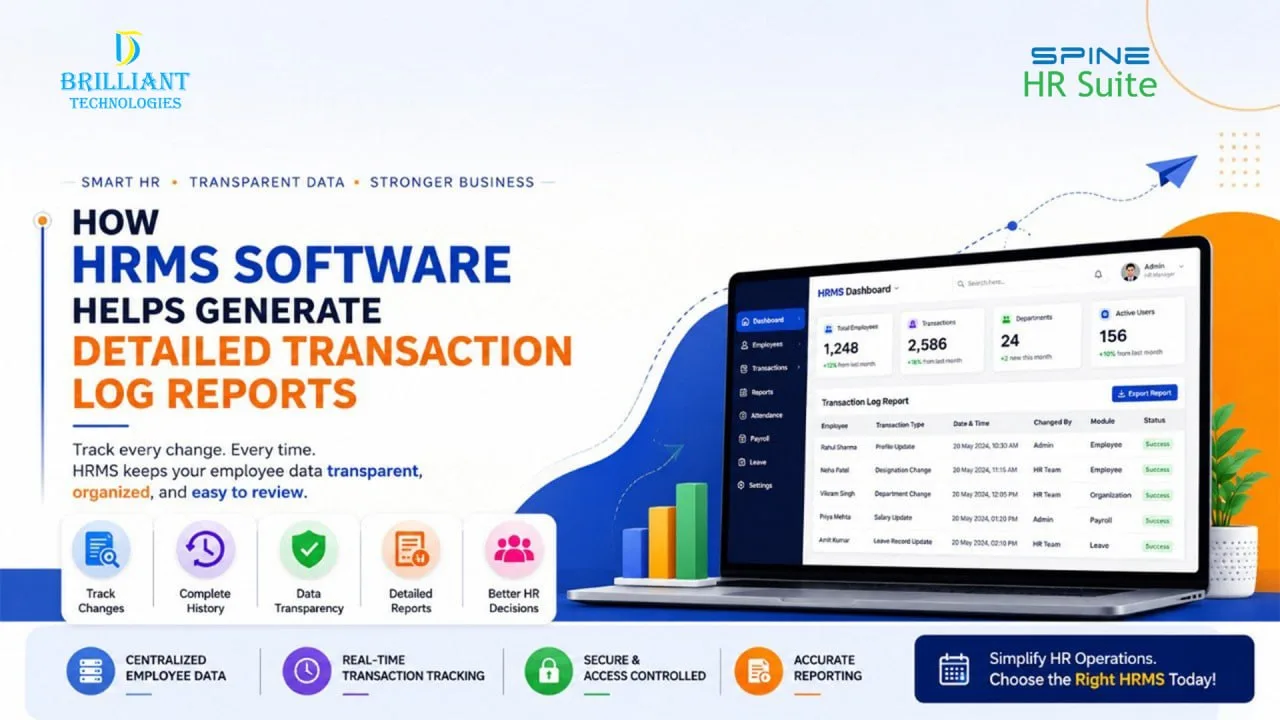
A transaction log report in HRMS provides a structured view of activities or changes recorded within the HR system. Depending on the software, it may contain details such as the employee involved, type of transaction, date, user activity, and information that was changed.
An HRMS transaction log report can help HR teams understand what happened to an employee record without having to search through multiple spreadsheets, files, or emails.
The exact information available depends on the HRMS platform and the modules enabled by the organization.
Why Are Detailed Transaction Logs Important for HR Teams?
Employee information changes regularly. An employee may change departments, receive a new designation, update personal information, or go through different stages of the employee lifecycle.
When these changes are handled manually, maintaining a complete history can take considerable effort.
A detailed employee transaction history report can make this process more organized by giving HR teams a central place to review relevant activities.
Some common benefits include:
- Easier review of employee record changes
- Better visibility into transaction history
- Less dependence on manual spreadsheets
- Faster access to HR information
- Improved employee data management
- Better support for internal reviews
- More structured HR reporting
For organizations with a growing workforce, these benefits can become increasingly valuable.
How HRMS Software Generates Transaction Log Reports
The process for generating a transaction report depends on the HRMS platform. However, a typical workflow is straightforward.
1. Select the Required Employee or Records
HR users can select the employee or group of records they need to review.
2. Select a Date Range
A specific date range can help users focus on recent activities or review historical transactions.
3. Apply Available Filters
Depending on the system, users may be able to filter transactions by employee, module, transaction type, user, or other available criteria.
4. Generate the Report
Once the required options are selected, the HRMS can generate the relevant detailed employee transaction report.
5. Review the Transaction History
HR teams can review the generated information to understand relevant activities and changes recorded within the system.
This approach can be more convenient than manually comparing old and new employee records.
What Information Can an HRMS Transaction Log Report Contain?
The details included in an HRMS transaction history report depend on the software’s reporting functionality and configuration.
A detailed report may include:
- Employee identification information
- Transaction type
- Date and time
- User or person who performed the activity
- Previous information
- Updated information
- HR module associated with the transaction
- Transaction status
- Relevant activity details
Having this information available through a centralized reporting system can make employee record management easier for HR teams.
How HRMS Helps Track Employee Record Changes
Employee records are continuously updated throughout the employee lifecycle. HR teams may need to modify information when an employee joins the organization, changes roles, moves departments, updates personal details, or completes another HR process.
An employee record transaction log can help provide a history of relevant changes.
For example, if an HR team needs to understand when a particular employee record was updated, a transaction report can provide useful information based on the system’s available history.
This type of employee activity tracking can be particularly helpful for organizations managing a large number of employees.
Benefits of HRMS Transaction Tracking
Better Employee Data Management
An HRMS brings employee information into a centralized system. This can make it easier for authorized users to access and manage employee records.
Easier Transaction History Review
Instead of searching through different files, HR teams can use an employee transaction history report to review available transaction information.
Reduced Manual Reporting
Preparing reports manually can consume valuable HR time. HRMS reporting capabilities can simplify repetitive reporting activities.
Better Data Visibility
Detailed transaction reports can give HR teams greater visibility into employee record activities and changes.
Support for Internal Reviews
When HR teams need to review a particular employee record or transaction, structured reporting can provide useful historical information.
More Organized HR Administration
A centralized approach to employee information and reporting can help HR teams manage routine activities more efficiently.
HRMS Transaction Reports and Employee Data Auditing
Employee data needs to remain accurate and properly managed. An employee data audit trail HRMS can help organizations review relevant changes made within the system.
An audit trail provides more context than simply viewing the latest version of an employee record. Where supported, it can help users understand when a change occurred and who performed the activity.
For example, HR teams may want to know:
- When was the record changed?
- What type of transaction was processed?
- Who performed the activity?
- What information was updated?
- Was previous information available for comparison?
The level of detail depends on the HRMS and its configuration. However, maintaining structured transaction history can make internal checking more manageable.
Manual Transaction Tracking vs HRMS Transaction Reporting
Many small organizations begin with spreadsheets or manual records. While this may work for a limited number of employees, the process can become difficult as the workforce expands.
| Manual Transaction Tracking | HRMS Transaction Reporting |
| Information may be stored in multiple files | Information can be centralized |
| Historical changes can be difficult to find | Transaction history can be easier to review |
| Reports may require manual preparation | Reports can be generated using available filters |
| More dependence on spreadsheets | Structured employee data management |
| Repetitive checking can consume HR time | Reporting can reduce repetitive work |
| Maintaining consistency can be challenging | Centralized records support better organization |
The objective of HRMS is not simply to eliminate manual work. It is to give HR teams better tools for managing employee information and reviewing relevant activities.
What Should Businesses Look for in HRMS Transaction Reporting Software?
Businesses considering an HRMS should evaluate more than just employee record storage.
If detailed transaction reporting is important, consider whether the software provides:
- Employee transaction history
- Detailed employee reports
- Employee activity tracking
- Record change history
- User activity information
- Flexible reporting options
- Centralized employee data
- HR data management
- Access controls
- Easy report generation
- Scalable HR functionality
It is also important to consider whether the reporting system is easy for HR users to understand and fits the organization’s existing HR processes.
HRMS Software for Businesses in Hyderabad
Hyderabad has businesses across IT, manufacturing, trading, healthcare, education, construction, professional services, and several other sectors. As employee numbers increase, maintaining HR records manually can become increasingly time-consuming.
For these organizations, HRMS reporting software Hyderabad businesses can use may help bring employee information and HR activities into a centralized platform.
Businesses searching for HRMS software in Hyderabad can evaluate solutions based on their employee management, payroll, attendance, leave, reporting, and other HR requirements.
Choosing an experienced HRMS software provider in Hyderabad can also be useful when an organization needs assistance with software implementation, configuration, employee training, and ongoing support.
Who Can Benefit from Detailed HRMS Transaction Reports?
Detailed transaction reporting can be useful for different types of organizations, including:
- Small and medium-sized businesses
- Growing companies
- Organizations with large employee databases
- Multi-department businesses
- Companies with structured HR processes
- Businesses managing frequent employee record changes
- Organizations looking to improve HR data management
As the number of employees and HR transactions increases, having a structured reporting system can become more useful.
How Does HRMS Improve Employee Data Management?
Effective employee data management is not only about storing information. HR teams also need to access, update, review, and maintain that information consistently.
An HRMS can bring employee records, HR processes, and reports together in a centralized environment. This can help reduce the need to maintain separate spreadsheets and manually compile information from different sources.
With features such as HRMS transaction tracking, employee reporting, and centralized records, HR teams can have better visibility into their day-to-day HR operations.
Conclusion
Detailed transaction log reports can make employee data easier to review and manage as an organization grows. By using HRMS software for transaction log reports, HR teams can maintain better visibility into employee record changes, transaction history, and everyday HR activities.
For businesses searching for HRMS software in Hyderabad from Brilliant Technologies, choosing a solution with practical reporting and employee data management capabilities can help create a more organized HR process.
Frequently Asked Questions
What is a transaction log report in HRMS?
A transaction log report in HRMS is a record of relevant activities or changes made within the HR system. Depending on the software, it may include employee details, transaction type, date, user information, and other related information.
How do you generate a transaction log report in HRMS?
The process depends on the HRMS platform. Generally, users select the required employee, date range, transaction type, or other available filters and then generate the report through the system’s reporting functionality.
Why are transaction logs important in HRMS?
Transaction logs can help HR teams review employee record changes, understand transaction history, support internal reviews, and maintain better visibility into employee data.
Can HRMS generate detailed employee transaction reports?
Yes. HRMS platforms that provide transaction reporting capabilities can generate detailed employee transaction reports based on the available features, modules, and system configuration.
How does HRMS track employee record changes?
An HRMS can record relevant activities performed within the system and maintain transaction history. The specific information captured depends on the HRMS platform and the module being used.
How does HRMS support employee data auditing?
HRMS software can maintain relevant transaction and activity information, allowing authorized users to review changes made to employee records and other HR information.
What should businesses look for in HRMS transaction reporting software?
Businesses should consider transaction history, reporting flexibility, employee activity tracking, record change history, access controls, ease of use, scalability, and compatibility with their HR processes.
Looking for a reliable HRMS solution in Hyderabad? Explore Spine HR Suite with Brilliant Technologies and simplify employee data management and HR reporting.