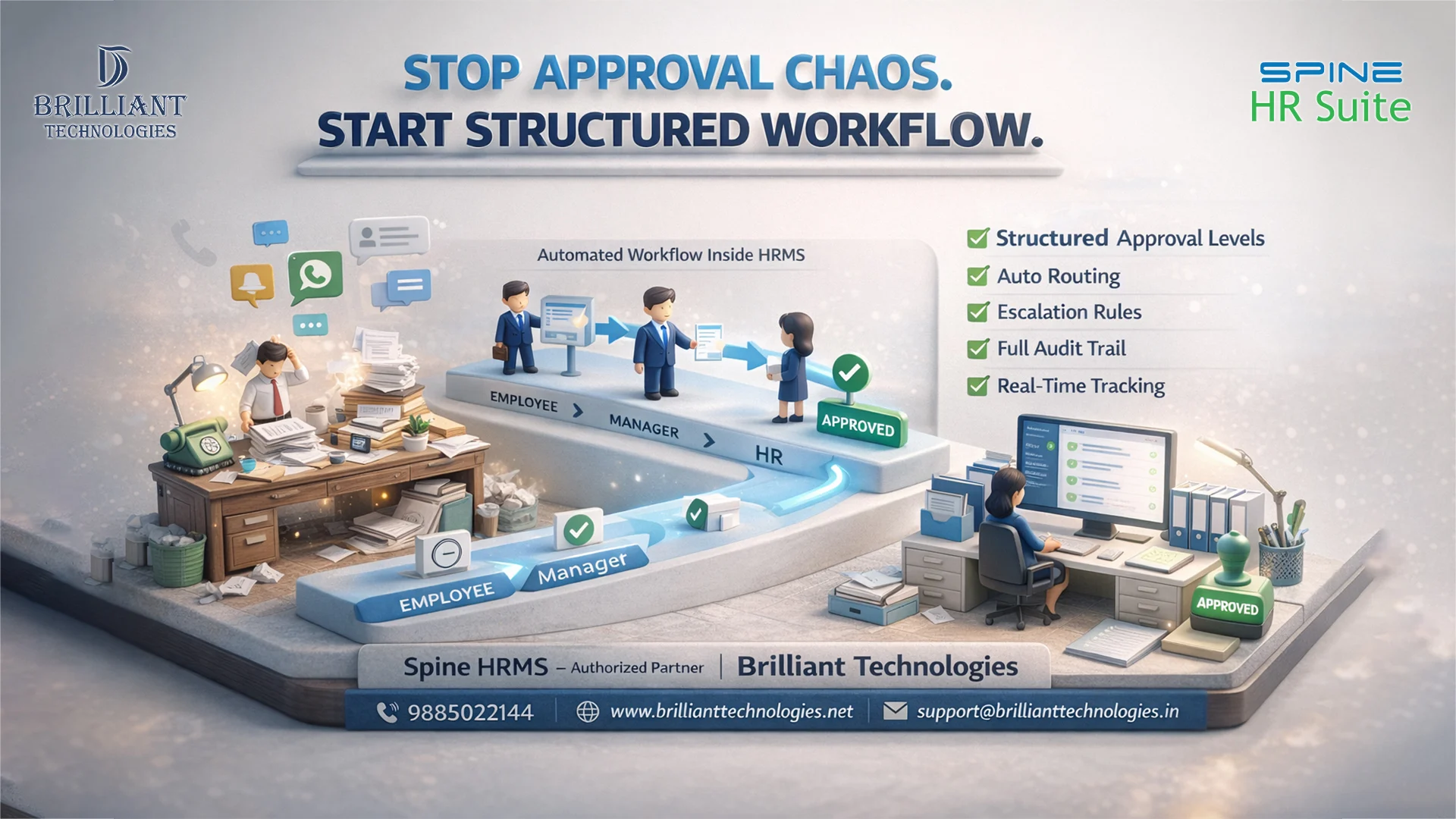
In many expanding organizations, approvals are handled through phone conversations, WhatsApp chats, or informal emails. Initially, this may appear manageable. However, as the workforce increases, complications begin to surface. Leave applications are delayed, expense claims remain unattended, and payroll confirmations are rushed at the final moment.
Therefore, having a structured approval system inside your HRMS becomes essential.
For HR managers, startup founders, and Chartered Accountants across India, designing well-defined workflow levels is crucial for maintaining order, control, and operational clarity.
What Does “Chalking Out Workflow Levels” Mean?
To put it simply, workflow levels determine who reviews a request and in which sequence.
For instance:
- An employee submits a leave request.
- The reporting manager evaluates it.
- HR provides the final confirmation.
This structured path represents a workflow.
Once implemented in an HRMS, the system automatically directs requests to the appropriate authority. As a result, many companies are now adopting an employee approval workflow system Hyderabad businesses trust to minimize manual coordination.
When planned correctly, workflow structures eliminate confusion and establish accountability.
Why Workflow Configuration Matters for Businesses
Whether you run a startup with a small team or manage a growing SME, approval processes directly affect daily efficiency.
Without a clearly defined structure:
- Supervisors may overlook requests.
- HR departments struggle to monitor pending items.
- Salary processing errors may occur.
- Regulatory compliance risks increase.
On the other hand, proper HRMS workflow configuration in Hyderabad allows approvals to move systematically while maintaining accurate records.
Moreover, for CAs managing multiple clients, organized workflows reduce the need for repeated follow-ups. Similarly, HR professionals gain better visibility, while startups create structured processes from the beginning.
Common Challenges Organizations Face
Although many companies recognize the value of automation, implementation can be challenging.
1. Undefined Reporting Structure
If approval responsibilities are unclear, system setup becomes confusing.
2. Excessive Approval Layers
Too many checkpoints slow down decision-making instead of improving governance.
3. Absence of Escalation Mechanisms
Without time-based escalation, requests may remain pending for days.
4. Improper Configuration
Even reliable HRMS software in Hyderabad will not deliver results if workflows are poorly structured.
In many cases, organizations view HRMS as only a payroll tool rather than a complete process management solution.
How to Design Effective Workflow Levels
Fortunately, creating an efficient structure does not need to be complicated.
Step 1: Identify Critical Processes
Begin by listing activities that require approval, such as leave management, expense reimbursements, hiring approvals, and payroll authorization.
Step 2: Assign Clear Responsibilities
Define who reviews requests at each stage. Keep the hierarchy practical and straightforward.
Step 3: Introduce Escalation Rules
If approvals are delayed, the system should automatically notify the next authority. Consequently, workflow automation HRMS Hyderabad companies rely on becomes more efficient and time-sensitive.
Step 4: Conduct Testing
Before final implementation, test different scenarios to ensure the approval flow operates smoothly.
Step 5: Review Periodically
As the organization grows, modify workflows to match new reporting structures.
Ultimately, an effective HRMS approval workflow setup Hyderabad businesses require should reflect their actual operations rather than a generic template.
Practical Advantages for Small and Medium Businesses
For SMEs, structured workflows offer measurable benefits.
Quicker Decisions
Requests move digitally without unnecessary delays.
Fewer Mistakes
Documented approvals reduce misunderstandings.
Stronger Compliance
Every action is recorded and traceable for audit purposes.
Greater Transparency
Employees can monitor the status of their applications in real time.
Improved Efficiency
HR teams spend less time coordinating approvals and more time focusing on strategic initiatives.
Therefore, many companies now seek dependable HRMS workflow software Hyderabad SMEs can rely on for long-term operational stability.
Why Choosing the Right Implementation Partner Matters
Technology alone does not guarantee success. Proper guidance during setup plays an equally important role.
At Brilliant Technologies, a Spine HRMS company based in Hyderabad, we have observed that organizations achieve better outcomes when workflows are aligned with their internal processes. Through hands-on experience in HRMS workflow configuration in Hyderabad, we emphasize clarity, simplicity, and structured implementation.
Rather than complicating operations, the objective should be to build a dependable framework that supports business growth.
Conclusion
In summary, designing effective workflow levels in HRMS goes beyond simple approvals. It establishes discipline, transparency, and responsibility across the organization.
For HR managers, startup leaders, and CAs, a thoughtfully configured workflow system reduces operational stress while improving control. When implemented correctly, it forms the backbone of compliance and structured growth.
Ultimately, selecting the right HRMS partner from Brilliant Technologies ensures your approval processes remain organized, efficient, and aligned with your long-term business vision — enabling your organization to move forward with confidence and readiness for expansion.