
India’s New Labour Codes 2025 mark one of the most important regulatory shifts in the country’s employment framework. Importantly, by consolidating 29 central labour laws into four unified codes, the government aims to simplify compliance, improve worker protection, and bring consistency across industries and states. At the same time, these reforms signal a decisive move toward modernising employer responsibilities.
Overall, this guide explains what the new labour codes are, when they apply, who they affect, what has changed, and what employers must do to comply, in clear, practical terms.
When Do the New Labour Codes Come into Effect?
The New Labour Codes come into force in 2025, with implementation timelines notified by individual states. However, while the central framework is common, employers must also follow state-specific rules issued under each code. In practice, this means compliance requirements may vary slightly depending on location.
Therefore, businesses should not wait for enforcement actions. Instead, they should proactively review their HR, payroll, and compliance processes in advance to avoid last-minute disruptions. As a result, organisations can transition smoothly once the laws are enforced.
Who Is Covered Under the New Labour Codes?
Additionally, the scope of coverage under the new labour laws is significantly broader than before. Earlier, many worker categories remained outside formal protections.
The codes apply to:
- Private companies and corporates
- Startups and MSMEs
- Factories, offices, warehouses, and service establishments
- Contract workers, fixed-term employees, and gig workers
Consequently, almost every organised employer now falls within the compliance framework, regardless of company size. From an employer’s perspective, this expands responsibility across the entire workforce.
Overview of the Four New Labour Codes
The 29 earlier laws have been consolidated into four comprehensive codes. Together, they form the foundation of India’s new labour framework:
- Code on Wages
- Code on Social Security
- Industrial Relations Code
- Occupational Safety, Health and Working Conditions Code
Importantly, each code focuses on a specific aspect of employment. At the same time, they operate as a single compliance ecosystem, requiring coordinated implementation.
Code on Wages: What Exactly Has Changed?
The Code on Wages introduces a single, uniform definition of wages across all laws. Previously, inconsistent definitions created ambiguity for employers.
Key changes employers must note:
- Basic wages must be at least 50% of total remuneration
- Overtime must be paid at twice the normal rate
- Minimum wages apply to all sectors
- Wages must be paid within defined timelines
As a result, this directly impacts salary structuring, gratuity, provident fund contributions, and payroll calculations. Consequently, employers can no longer split salaries excessively to reduce statutory liability.
Code on Social Security: Expanded Benefits and Obligations
Notably, the Social Security Code is one of the most transformative aspects of the reform. Earlier, large segments of the workforce remained outside statutory protection.
What’s new:
- Gig workers and platform workers are now legally recognised
- Fixed-term employees become eligible for gratuity after one year
- Mandatory registration of establishments and eligible workers
- Coverage under PF, ESI, maternity benefits, and insurance schemes
As a result, this code brings millions of previously uncovered workers into the social security net. In turn, employers must strengthen record-keeping and reporting practices.
Industrial Relations Code: Hiring, Termination, and Disputes
Meanwhile, the Industrial Relations Code focuses on balancing business flexibility with worker protection. Specifically, it simplifies several long-standing procedural requirements.
Major provisions include:
- Layoffs without prior government approval allowed up to 300 employees
- Legal recognition of fixed-term employment
- Simplified standing orders
- Clear procedures for strikes, lockouts, and dispute resolution
Therefore, for employers, this code reduces administrative friction while maintaining accountability. At the same time, it promotes transparency in labour relations.
Occupational Safety, Health and Working Conditions Code
In addition, this code unifies workplace safety, health, and welfare provisions under one law. Previously, these requirements were scattered across multiple acts.
Key requirements:
- Standard safety norms across industries
- Regulated working hours and rest intervals
- Mandatory health check-ups for specific roles
- Safety provisions for women working night shifts
- Welfare facilities at the workplace
As a result, employers must maintain accurate records related to attendance, shifts, and safety compliance. Consequently, manual tracking systems become risky.
What Are Employers Required to Do Now?
Under the new labour codes, employers must ensure:
- Appointment letters for all employees
- Accurate wage and attendance records
- Correct statutory deductions and contributions
- Unified registrations and periodic filings
- Audit-ready documentation at all times
However, manual systems increase the risk of errors, especially during inspections. Therefore, digital compliance readiness becomes essential.
Impact on HR and Payroll Operations
From a compliance standpoint, the labour codes demand precision and consistency. Payroll errors, missing documents, or incorrect wage definitions can result in penalties. In fact, even minor inaccuracies may trigger inspections.
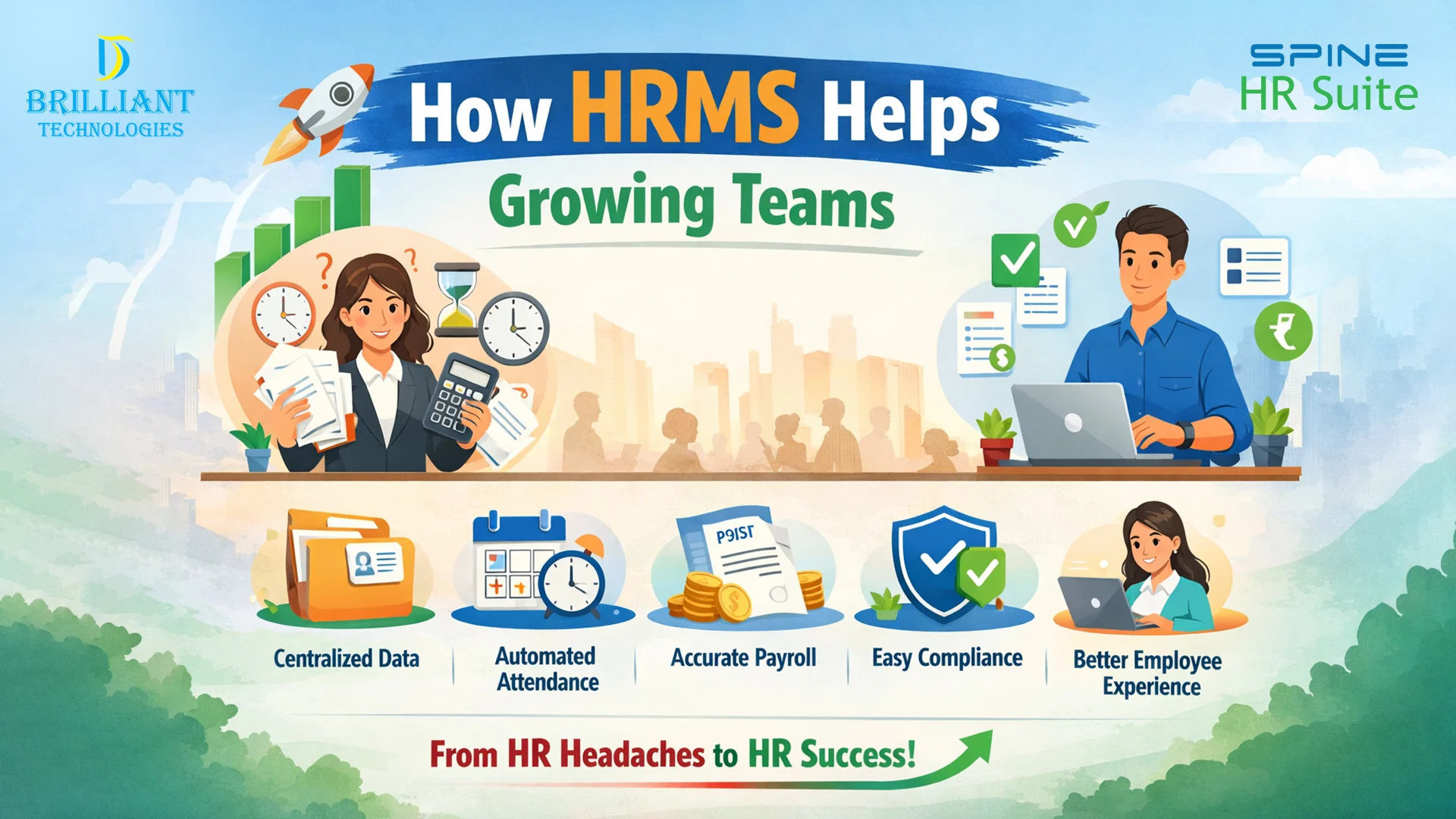
Because of this, many organisations are adopting structured HR Tech solutions to automate payroll, attendance, and compliance reporting. In practical terms, a well-implemented HRMS for small and medium businesses reduces administrative burden while ensuring statutory accuracy.
Why Integration with Accounting Systems Matters
In addition, many organisations, especially in Hyderabad, rely on Tally for accounting. Under the new laws, HR and finance data must align perfectly to avoid discrepancies.
Therefore, solutions with HRMS Tally integration ensure payroll data flows seamlessly into accounting records, reducing duplication and compliance gaps. As a result, businesses evaluating the best Tally software in Hyderabad or the Best TallyPrime in Hyderabad increasingly prioritise this alignment.
In this context, working with a reliable Tally software dealer in Hyderabad ensures correct configuration and long-term compliance readiness. Notably, Brilliant Technologies HRMS solutions support businesses by aligning HR, payroll, and statutory processes with the new legal framework.
Penalties for Non-Compliance
Importantly, failure to comply with the new labour codes can lead to:
- Monetary penalties
- Legal notices and inspections
- Disruption of business operations
- Reputational risk
Overall, the new framework places strong emphasis on digital records and transparency, making non-compliance easier to detect.
Frequently Asked Questions (FAQs)
Q1. Do the new labour codes apply to small businesses?
Yes. In most cases, provisions apply regardless of company size, with some thresholds varying by code.
Q2. Are gig and contract workers covered?
Yes. Specifically, the Social Security Code includes gig, platform, and fixed-term workers.
Q3. Do employers need to change salary structures?
In many cases, yes, especially to meet the 50% wage definition requirement.
Q4. Are state rules different?
The central codes are uniform. However, states issue their own implementation rules.
Conclusion
Ultimately, India’s New Labour Codes 2025 aim to create a simpler, fairer, and more transparent employment system. While the laws reduce complexity, they demand disciplined HR, payroll, and compliance practices.
For business owners and HR teams, understanding the law is the first step. Equally important, ensuring systems and processes are aligned with the new framework determines long-term compliance success. Organisations that prepare early will face fewer disruptions and greater confidence in the years ahead.