In today’s competitive business environment, HR teams are expected to do much more than manage employee records and attendance. They are also responsible for helping organizations make smarter workforce decisions. This is where an HR analytics dashboard becomes valuable.
A well-designed HR analytics dashboard provides a clear view of important workforce data in one place. Instead of reviewing multiple spreadsheets and reports, HR managers can quickly understand employee trends, performance levels, attendance patterns, and workforce productivity.
What Is an HR Analytics Dashboard?
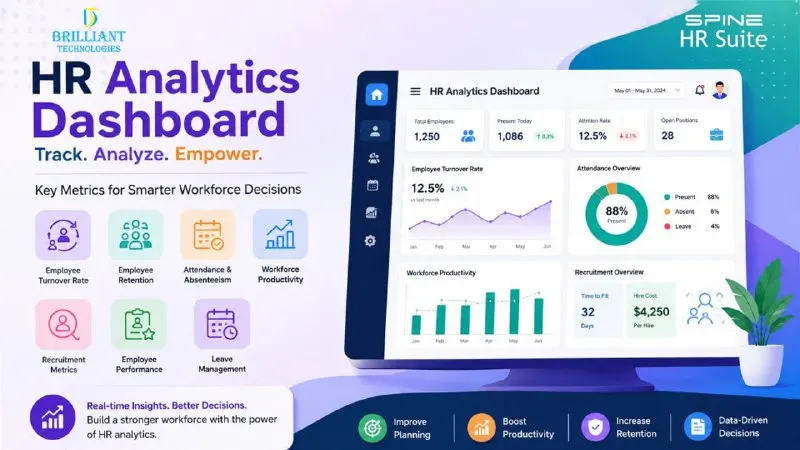
An HR analytics dashboard is a visual reporting tool that collects and displays key employee-related data through charts, graphs, and reports. It helps HR professionals monitor workforce activities and make informed decisions based on real-time information.
As businesses continue to grow, having access to accurate HR data analytics becomes increasingly important. Therefore, many organizations are now adopting modern HRMS solutions to simplify workforce management and reporting.
Why Is an HR Analytics Dashboard Important?
Without proper visibility into workforce data, businesses may struggle to identify problems before they become costly. For example, rising employee turnover, declining productivity, or increasing absenteeism can often go unnoticed.
However, with an effective HR dashboard software, management teams can track important workforce metrics regularly and take corrective action when needed.
As a result, organizations can improve employee engagement, reduce operational inefficiencies, and support long-term growth.
Key Metrics That Should Be Included in an HR Dashboard
1. Employee Turnover Rate
Employee turnover rate shows how many employees leave the organization during a specific period.
Tracking this metric helps businesses understand retention challenges and identify departments that may require additional support.
2. Employee Retention Analytics
While turnover focuses on exits, employee retention analytics measures how successfully a company retains talent.
Consequently, HR teams can evaluate employee satisfaction and workplace effectiveness.
3. Attendance and Absenteeism
Attendance data helps organizations monitor employee availability and identify recurring absence patterns.
Furthermore, this metric supports better workforce planning and resource allocation.
4. Workforce Productivity
Workforce productivity measures employee output and efficiency.
By reviewing productivity trends, businesses can recognize high-performing teams and provide additional support where necessary.
5. Recruitment Metrics
Hiring-related data such as time-to-fill positions, recruitment costs, and candidate conversion rates offer valuable insights into recruitment effectiveness.
Therefore, companies can optimize hiring strategies and reduce recruitment expenses.
6. Employee Performance Indicators
Performance-related metrics help managers evaluate employee contributions and identify development opportunities.
In addition, performance dashboards support fair and transparent appraisal processes.
7. Leave Management Analytics
Tracking leave patterns allows HR teams to understand workforce availability and maintain operational continuity.
As a result, businesses can avoid staffing shortages and improve scheduling efficiency.
Common Challenges Businesses Face
Many startups and growing companies still rely on manual reporting methods. Consequently, data may become outdated, inaccurate, or difficult to interpret.
Some common challenges include:
- Scattered employee information
- Delayed reporting processes
- Limited workforce visibility
- Difficulty tracking employee performance
- Inconsistent decision-making
Therefore, adopting a real-time HR dashboard can significantly improve reporting accuracy and efficiency.
Benefits for Small and Medium Businesses
For SMEs, every workforce decision matters. An employee analytics dashboard provides valuable insights without requiring extensive manual effort.
Key benefits include:
- Faster decision-making
- Improved employee retention
- Better workforce planning
- Enhanced productivity tracking
- Simplified HR reporting
- Accurate performance monitoring
- Data-driven business growth
Moreover, business owners gain greater confidence when making workforce-related decisions.
How Do HR Dashboards Improve Decision-Making?
HR dashboards improve decision-making by providing real-time access to workforce information. Instead of relying on assumptions, managers can use accurate data to identify trends, address challenges, and plan future workforce requirements.
Additionally, visual reports make complex information easier to understand, helping leaders respond quickly to changing business needs.
Why Businesses in Hyderabad Are Choosing Advanced HRMS Solutions
Organizations across Hyderabad are increasingly investing in workforce analytics software and HR dashboard solutions to streamline HR operations.
As a trusted HR software company in Hyderabad, Brilliant Technologies delivers advanced Spine HRMS solutions that help businesses monitor workforce performance, generate meaningful reports, and improve operational efficiency.
Whether organizations require an HR KPI dashboard, HR reporting dashboard, employee management dashboard, or comprehensive HRMS dashboard, modern solutions can support better workforce management and business growth.
Conclusion
An effective HR analytics dashboard is no longer a luxury—it has become an essential business tool. By tracking the right workforce metrics, organizations can improve employee retention, enhance productivity, and make smarter business decisions.
Most importantly, choosing the right HRMS partner ensures businesses have access to reliable data, streamlined reporting, and actionable workforce insights. With HRMS solutions by Brilliant Technologies, organizations can stay confident, compliant, and prepared for sustainable growth in an increasingly competitive business landscape.
Frequently Asked Questions (FAQs)
1. What is an HR analytics dashboard?
An HR analytics dashboard is a reporting tool that visually displays workforce data, helping HR teams monitor employee performance, attendance, productivity, and retention.
2. What metrics should be included in an HR dashboard?
Important metrics include employee turnover rate, retention analytics, attendance records, productivity measures, recruitment statistics, performance indicators, and leave management data.
3. How do HR dashboards improve decision-making?
HR dashboards provide real-time workforce insights, enabling managers to make informed decisions based on accurate employee data.
4. Why is workforce productivity tracking important?
Productivity tracking helps organizations measure employee efficiency, identify performance trends, and improve overall business outcomes.
5. Are HR analytics dashboards useful for small businesses? Yes. HR dashboards make it easier for small and medium businesses to track employee information, plan their workforce effectively, and manage daily HR activities with less manual effort.