Managing employees effectively involves much more than processing salaries on time. Every business must also track employee leave accurately, maintain compliance, and ensure payroll calculations reflect attendance records correctly. However, when payroll and leave management operate separately, errors, delays, and administrative challenges can quickly arise.
This is where unified payroll and leave management becomes valuable. By bringing payroll and leave information together in a single system, businesses can improve accuracy, save time, and create a smoother experience for both HR teams and employees.
What Is Unified Payroll and Leave Management?
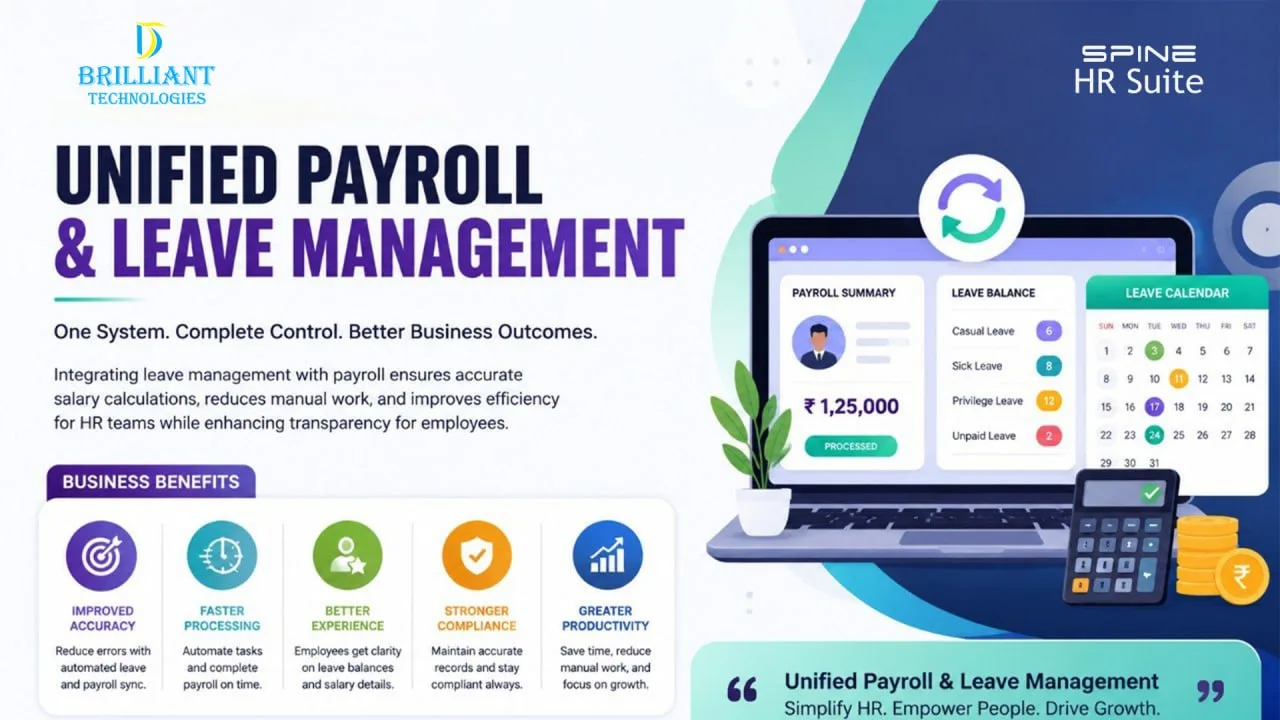
Unified payroll and leave management refers to an integrated system where employee leave records automatically connect with payroll processing.
In simple terms, whenever an employee applies for leave, receives approval, or exceeds available leave balances, the information is automatically reflected during salary calculation. As a result, HR teams no longer need to manually transfer leave data between multiple systems.
Instead of maintaining separate records, businesses can use a centralized payroll and leave system that keeps everything synchronized and up to date.
Why Is It Important for Businesses?
As organizations grow, managing employee information manually becomes increasingly difficult. Even small mistakes in leave records can affect payroll accuracy and employee satisfaction.
For example, if unpaid leave is not recorded properly, salary calculations may become incorrect. Likewise, delayed updates can create confusion during payroll processing.
Therefore, integrating leave management with payroll helps businesses maintain accurate records while reducing administrative effort. Furthermore, it allows HR teams to focus on strategic tasks rather than repetitive data entry.
Common Challenges Businesses Face
Many companies still rely on spreadsheets or disconnected software applications. Consequently, they often encounter several challenges.
Manual Data Entry Errors
When leave information must be entered separately into payroll systems, mistakes can happen easily. Even a small error may lead to incorrect salary payments.
Delayed Payroll Processing
HR teams often spend valuable time cross-checking attendance records, leave balances, and payroll information. As a result, payroll processing may take longer than expected.
Compliance Concerns
Businesses must maintain accurate employee records for statutory and organizational requirements. However, managing multiple systems can make compliance more difficult.
Employee Queries
Employees frequently want clarity regarding leave balances, deductions, and salary calculations. Without integrated data, answering these questions can become time-consuming.
How Does Leave Management Affect Payroll?
Leave management directly impacts payroll because employee attendance influences salary calculations.
For instance:
- Approved paid leave usually does not affect salary.
- Unpaid leave may result in salary deductions.
- Leave encashment can increase payroll payouts.
- Attendance and leave records influence monthly payroll calculations.
Therefore, accurate leave synchronization with payroll is essential for maintaining employee trust and ensuring correct salary processing.
Benefits of Unified Payroll and Leave Management
Improved Payroll Accuracy
Because leave data automatically flows into payroll, businesses can significantly reduce manual errors. Consequently, salary calculations become more reliable.
Faster Payroll Processing
Automated leave-to-payroll processing eliminates repetitive tasks. As a result, HR teams can complete payroll activities more efficiently.
Better Employee Experience
Employees appreciate transparency. Since leave information and payroll records remain connected, they can better understand salary calculations and leave deductions.
Stronger Compliance
Integrated systems help businesses maintain accurate records and support regulatory requirements. Additionally, centralized information simplifies audits and reporting.
Greater Productivity
Rather than spending hours verifying data, HR professionals can focus on employee engagement, workforce planning, and organizational growth.
Scalable Operations
As businesses expand, managing employee information becomes more complex. Fortunately, payroll and leave management software can support growing workforce requirements without increasing administrative burden.
How Leave Data Is Reflected in Payroll Systems
In an integrated payroll and leave system, approved leave records automatically update employee payroll information.
For example, if an employee takes unpaid leave, the system calculates the deduction according to company policies. Similarly, attendance records, leave balances, and salary calculations remain connected throughout the payroll cycle.
This automation improves consistency while reducing the possibility of human error.
Why Businesses Choose HRMS Payroll Leave Automation
Modern organizations increasingly adopt HRMS payroll leave automation because it creates a seamless connection between leave management, attendance tracking, and payroll processing.
Additionally, businesses gain real-time visibility into employee records, making decision-making easier and more accurate. Consequently, HR operations become more efficient while employees benefit from greater transparency.
Conclusion
In today’s competitive business environment, accurate payroll processing and efficient leave management are essential for organizational success. By adopting a unified payroll and leave management solution, businesses can reduce errors, improve productivity, strengthen compliance, and deliver a better employee experience.
At Brilliant Technologies, Hyderabad, we help organizations simplify HR operations through Spine HRMS solutions that bring payroll, attendance, and leave management together in one streamlined platform. With the right HRMS partner, businesses can stay confident, compliant, and prepared for sustainable growth in the years ahead.
Frequently Asked Questions (FAQs)
What is unified payroll and leave management?
Unified payroll and leave management is a system where employee leave records automatically connect with payroll processing, ensuring accurate salary calculations.
How does leave management affect payroll?
Leave management influences payroll by determining paid leave, unpaid leave deductions, leave encashment, and attendance-related salary calculations.
What are the benefits of unified payroll and leave management?
Key advantages include improved payroll accuracy, faster processing, reduced manual work, better compliance, and enhanced employee satisfaction.
How is leave data reflected in payroll systems?
Approved leave information automatically updates payroll records, allowing the system to calculate salary adjustments and deductions accurately.
Why should businesses use payroll and leave integration software?
Integrated software reduces administrative effort, minimizes errors, improves transparency, and helps businesses manage employee information more effectively.