Managing employee expenses is an essential part of every business. Whether employees travel for meetings, purchase office supplies, or incur work-related costs, companies need a reliable way to process reimbursements. However, many organizations still rely on manual expense claims, which often lead to delays, paperwork, and unnecessary administrative work.
As businesses continue to embrace digital transformation, many are shifting toward HRMS automation for expense management. As a result, HR teams can save time, improve accuracy, and create a better employee experience.
What Is HRMS Expense Management?
HRMS expense management is a feature within an HRMS platform that helps organizations manage employee expense claims digitally. Instead of filling out paper forms or sending spreadsheets through email, employees can submit expenses online through a centralized system.
Furthermore, managers can review claims, approve requests, and track reimbursement status from a single dashboard. Consequently, the entire expense reimbursement process becomes faster and more transparent.
Why Is Expense Automation Important for Businesses?
In today’s fast-moving business world, organizations are constantly looking for ways to work more efficiently.Manual processes often consume valuable time and increase the possibility of human errors.
For instance, HR teams may spend hours checking receipts, verifying claims, and following up on approvals. Meanwhile, employees may wait longer than expected to receive reimbursements.
Therefore, implementing an automated expense reimbursement system helps businesses streamline operations while improving employee satisfaction.
Common Challenges with Manual Expense Claims
Many startups and growing companies experience several difficulties when handling expense claims manually.
Delayed Approvals
Paper-based forms and email approvals often create bottlenecks. Consequently, employees often have to wait for their expense claims to be processed and paid.
Data Entry Errors
Manual entry can sometimes lead to errors, which may create inconsistencies in records and make it harder to review business expenses accurately.
Lack of Visibility
Without a centralized platform, tracking the status of claims becomes difficult. In addition, employees frequently need to contact HR for updates.
Excessive Administrative Work
HR and finance teams often spend significant time managing paperwork instead of focusing on strategic activities.
How Does HRMS Automate Expense Claims?
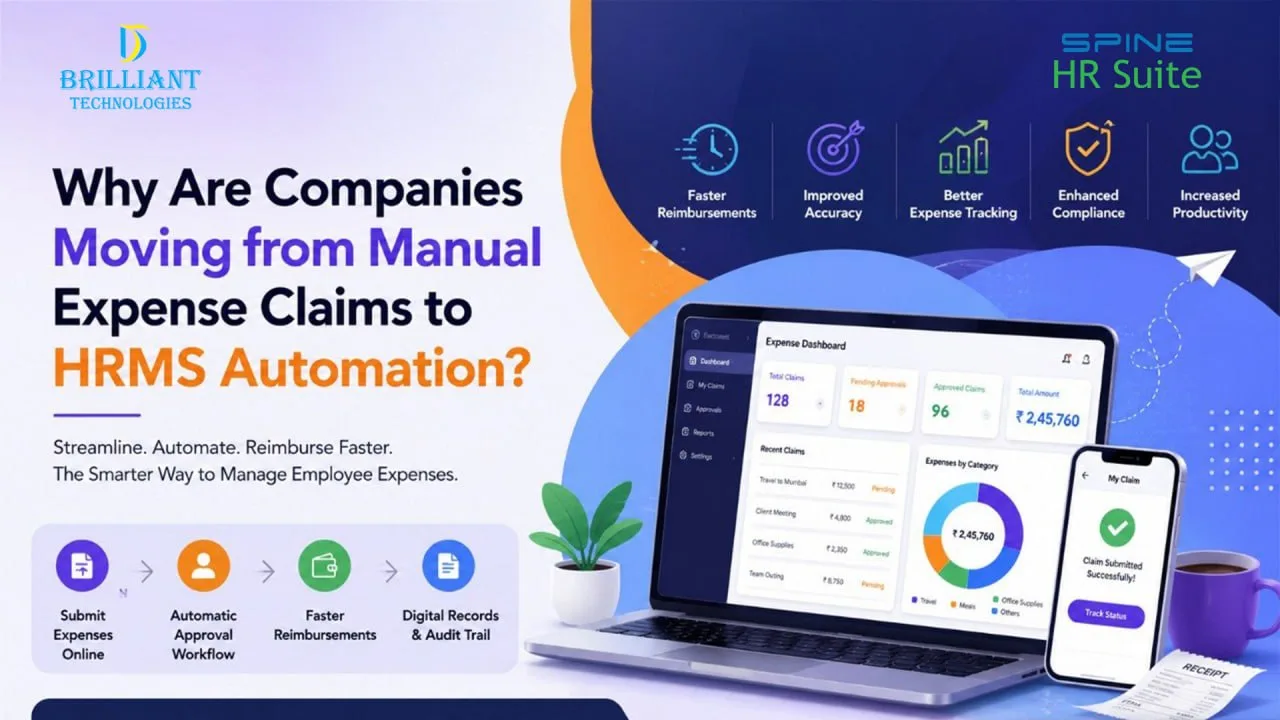
An HRMS expense management system simplifies the entire workflow from submission to reimbursement.First, employees upload receipts and submit claims digitally. Next, the system routes requests to the appropriate manager for approval. After approval, reimbursement details are processed efficiently and recorded automatically.
Moreover, automated notifications keep everyone informed throughout the process. Consequently, businesses gain better control over expense management while reducing manual effort.
Benefits of HRMS Expense Automation for Small and Medium Businesses
Faster Reimbursements
Employees receive payments more quickly because approvals and processing happen digitally.
Improved Accuracy
Automation reduces manual data entry, which helps minimize errors and inconsistencies.
Better Expense Tracking
Businesses can monitor spending patterns more effectively and make informed decisions.
Enhanced Compliance
Digital records create a clear audit trail. Therefore, organizations can maintain better documentation and accountability.
Increased Productivity
Since repetitive tasks are automated, HR teams can focus on employee engagement, workforce planning, and business growth.
Why Businesses in Hyderabad Are Choosing HRMS Solutions
Many organizations are adopting HRMS software in Hyderabad to improve workforce management and simplify expense reimbursement management. Startups, SMEs, and growing enterprises increasingly prefer employee expense tracking software that integrates expense claims, payroll, and employee records within a single platform.
At Brilliant Technologies, we understand the challenges businesses face when managing employee expenses. Our Spine HRMS solution helps organizations create a smooth digital expense claim process while improving efficiency and transparency across departments.
Conclusion
The move from manual expense claims to HRMS automation is no longer just a trend. Instead, it has become a practical business requirement. By automating expense approvals, reimbursement tracking, and record management, organizations can save time, reduce errors, and improve employee satisfaction.
As businesses continue to grow, choosing the right HRMS partner from Brilliant Technologies becomes increasingly important. With the right technology and expert support, companies can remain confident, compliant, and prepared for future growth.
FAQs
1. What is HRMS expense management?
HRMS expense management is a digital system that allows employees to submit expense claims, upload receipts, track approvals, and receive reimbursements through a centralized HR platform.
2. How does HRMS automate expense claims?
HRMS automates expense claims by digitizing submissions, routing approvals automatically, tracking claim status, and maintaining records without manual paperwork.
3. Why are companies moving away from manual expense claims?
Companies are adopting automation because manual processes often cause delays, errors, paperwork, and limited visibility into employee expenses.
4. What are the benefits of an automated expense reimbursement system?
An automated system improves accuracy, speeds up reimbursements, reduces administrative workload, enhances transparency, and supports compliance.
5. Can small businesses benefit from HRMS expense automation?
Yes. Small and medium businesses can save time, reduce operational costs, improve employee satisfaction, and manage expenses more efficiently.
6. How does employee expense tracking software help organizations?
It provides real-time visibility into spending, simplifies approvals, maintains digital records, and supports better financial planning.